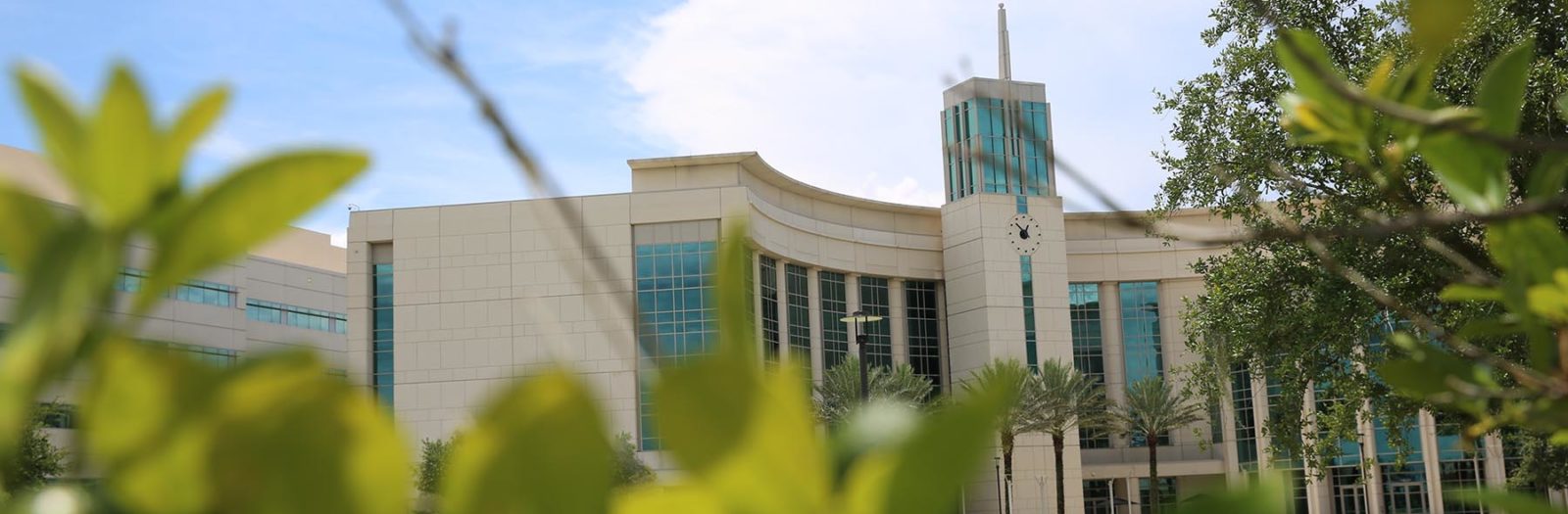
Preparing Early: Your Needs and Support System

Academic Advisement Each of the eleven colleges maintains an Academic Advisement Office to assist students with matters pertaining to their degree requirements. Resource materials are available for most majors. This office should be one of your first stops. Your academic advisor can help you with such matters as course loads, course combinations, meaningful electives, trial schedules, choice of alternate courses and graduation requirements. To be assigned an appropriate academic advisor, you need to go to the administrative office of the department of your major.
Pre-Health Professions Advisement The Pre-Health Professions Advisement Office (PHPAO) serves as an important link between you and the professional schools you seek to enter. While this office is not your first stop for academic advisement, the Director of the office, who is also an academic faculty member, can further assist you with questions you may have about academic matters. The primary focus of this office, however, is to provide advisement on all aspects of the application and admission process. The following are examples of topics you might discuss with the Director of the PHPAO. - Overview of Select Medical Careers course
- Refining academic course selection/ course combinations when necessary
- Clinical exposure and experience, including access to clinical internships
- Research exposure and experience, including access to research internships
- Available resource materials
- Review and preparation for standardized admission tests
- Composite Evaluation preparation
- Waiver/Non-Waiver rights
- Application services
- Early decision programs
- Selected references for letters of recommendation
- When to apply
- Pre-application materials packet and checklist
- Financing professional school
- Tentative list of schools to apply to
- Preparation of a student applicant file
- Unique aspects of your applicant file
- Preparation for interviews, including videotaped mock interviews
The Pre-Health Professions Advisement Office serves all students preparing for and seeking admission to professional schools of chiropractic, dentistry, medicine, optometry, pharmacy, podiatry, and veterinary medicine. The office also serves students applying to a Physician Assisant Program, an Allied Health discipline. Pre-Health Professional Planning Admission to a health professional school is highly competitive. Pre-Health professions students are expected to be high achievers and to obtain good grades with heavy loads and rigorous course combinations. Most professional schools expect applicants to present at least a "B" average and to carry a minimum of 15 semester hours each term, with the exception of Summer terms. Each student is urged to carefully select a degree-granting major. This will not only allow one to become more competitive for admission, but also to prepare for an alternate career in the event admission to a professional school is denied. ANY degree-granting program may be selected as a major; however, the science majors generally lend themselves most adequately to pre-health professions preparation as their curricula includes many courses required for admission to most professional schools. Additionally, prudent use of elective hours in the curricula will permit other appropriate pre-health professions courses to be obtained. All pre-health professions students are strongly encouraged to participate in the activities of one or more of the student health-related organizations. Curricula Guidelines All pre-health professions students are strongly encouraged to enroll in SLS 2311 (Overview of Select Medical Careers) the first Spring semester they are enrolled. This course provides a broad exposure to the various four-year health professions. In addition, the entire pre-professional process (academic preparation, applications, admissions tests, interviews, scholarships, etc.) is explained in depth. All pre-health professions students should complete the following courses (many of which are applicable to the GEP): | General Biological Sciences | BSC 2010C, 2011C | | Genetics | PCB 3063 | | General Chemistry | CHM 2045C, 2046, 2046L | | Organic Chemistry | CHM 2210, 2211, 2211L | | Biochemistry | BCH 4053 | | Microbiology | MCB 3020 | | Calculus | MAC 2233 (prefer MAC 2311, 2312 | | Physics | PHY 2053C, 2054C | | Statistics | |
For additional recommended courses, contact the Pre-Health Professional Advisement Office (HPA 1, 124). Choosing a Major and Academic Advisement The advantage of declaring a major early is to be linked with an academic advisor within his or her chosen degree track. Problems are less likely when students remain in contact with advisors. Traditional majors for pre-health professionals are characterized by degree requirements which overlap most professional school admission requirements such as Chemistry, Biology, Molecular Biology and Microbiology (one major). If a student elects a non-traditional pathway and does not complete more than the minimum science requirements, she or he will be expected to have accomplished an outstanding performance record in the science classes taken. The curriculum for the first two years is very similar for all pre-health professions students. Professional schools are less concerned with what undergraduate major one chooses than how well he or she performed and his or her choice of enrichment electives. Dates of Importance The pre-professional screening process is initiated every February. Application packets become available on-line at http://www.biomed.ucf.edu mid-February. Dental and veterinary medicine applicants should return completed packets by April 15th. All other applicants (chiropractic, medical, optometry, podiatry, and pharmacy) are encouraged to return completed packets by May 1st. All students should be aware of registration deadlines and test dates for their specific admissions exam (DAT, MCAT, OAT, GRE, etc.) In addition, most four-year health professions schools subscribe to professional application services (AMCAS, ADDSAS, ACOMAS, etc.) and thus require completion of a thorough application packet provided by the various application services. Otherwise, the student applicant must deal directly with the admissions office of the school. G.A. Lopez, Ph.D., Director, PHPAO, and Professor of Physiology | Phone: | (407) 823-2670 | | Fax: | (407) 823-6051 | | Emails: | galopez@mail.ucf.edu
This e-mail address is being protected from spam bots, you need JavaScript enabled to view it
| | Address: | 124 Health & Public Affairs I Orlando, FL 32816-2200 |
|